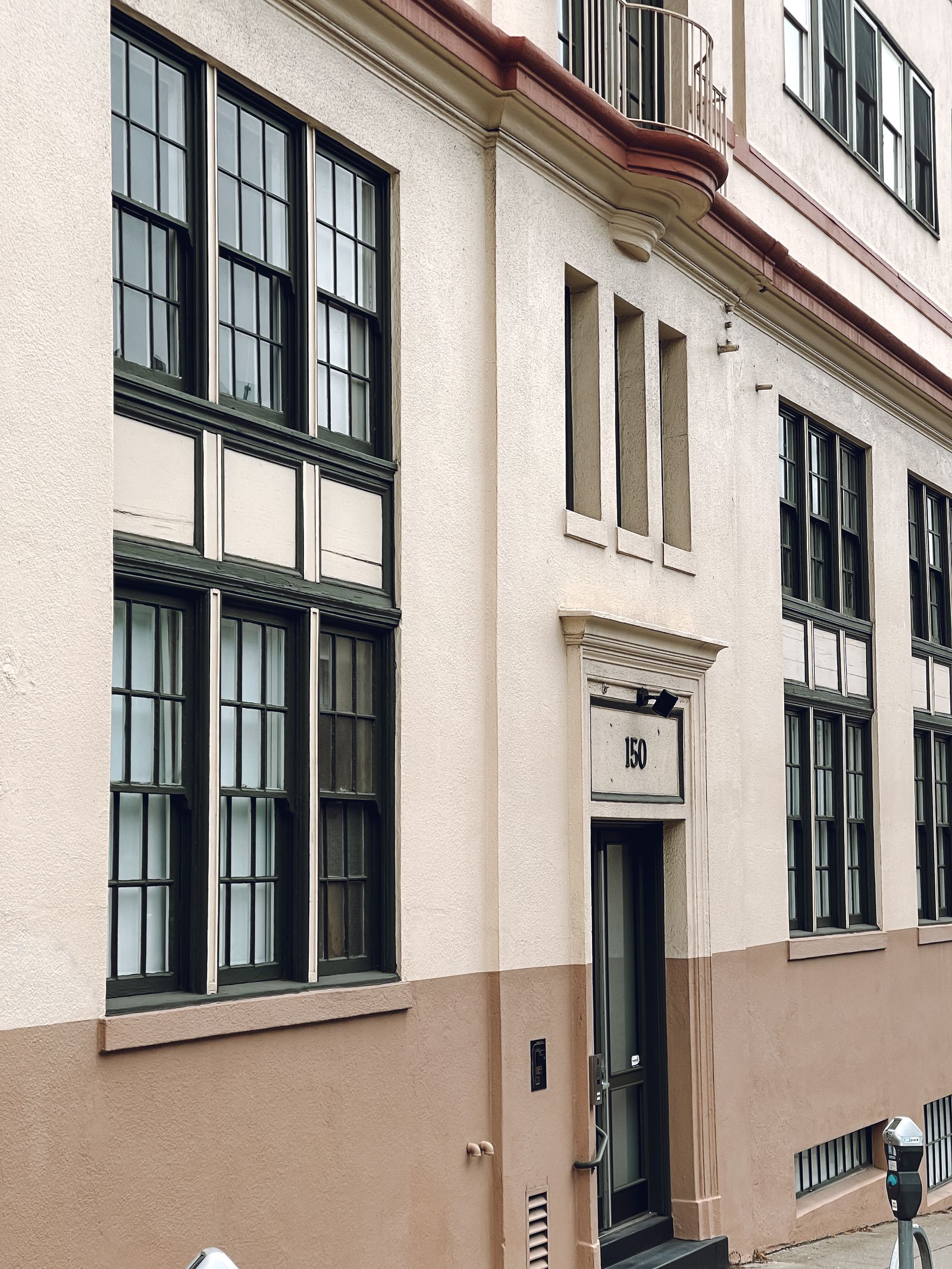
What soft washing is designed to accomplish
Soft washing generally uses a compatible cleaning solution, controlled dwell time, and a lower-pressure rinse for suitable organic and atmospheric soils. It may be useful for moss-like growth, pollen, algae-like staining, bird residue, and some film on compatible brick, concrete, painted surfaces, stucco, EIFS, and other evaluated materials. The goal is to loosen or treat contamination without relying on unnecessary force. It is not a promise that every green, black, or streaked mark will disappear, especially when the cause is mineral scale, oxidation, embedded traffic film, failed coating, or water intrusion.
The phrase soft wash does not remove the need for controls. Chemistry can affect plants, metals, coatings, sealants, glazing, and runoff. A shaded Eugene wall may hold moisture while a sunny elevation dries quickly. A property with active students, patients, guests, or retail traffic also needs entry protection and pedestrian separation. A complete quote should describe the solution approach, dwell, rinse, test areas, protection, water management, and limitations instead of treating low pressure as the entire process.
- Select a compatible process for the material and actual deposit, not a preset service label.
- Review chemistry, dwell, rinse, plant protection, glazing, metals, and runoff as one plan.
- Test representative areas when coatings, historic repairs, or staining causes are unclear.
- Separate routine cleaning from restoration, leak diagnosis, repairs, and coating replacement.
Where controlled pressure can fit
Pressure washing can have a role on durable, compatible surfaces and localized deposits when pressure at the surface, flow, nozzle, distance, angle, overspray, and runoff are controlled. Some concrete walks, service aprons, curbs, loading areas, and hardscape may tolerate a carefully selected approach after evaluation. A pressure number by itself does not predict the result. Flow, distance, operator control, substrate condition, and the surrounding site matter just as much.
Excessive force can etch concrete, expose aggregate, remove mortar, lift paint, disturb sealants, mark EIFS, drive water behind panels, or damage older repairs. Eugene's mixed-use properties can have a durable lower wall beside a fragile coating, a patched masonry area beside newer brick, or a painted metal panel next to concrete. The question is not whether pressure is good or bad in the abstract. It is which zone can tolerate controlled pressure, which needs a treated rinse, and which requires contact work or restoration.
Pressure also changes the operational footprint. Higher water volume can affect hose routing, splash, runoff, nearby doors, bike lanes, occupied sidewalks, landscaping, and stormwater features. A method that seems fast on an empty wall may create more disruption at a university entrance or a retail center. The quote should connect the method to access and site controls.
Match the method to Eugene properties
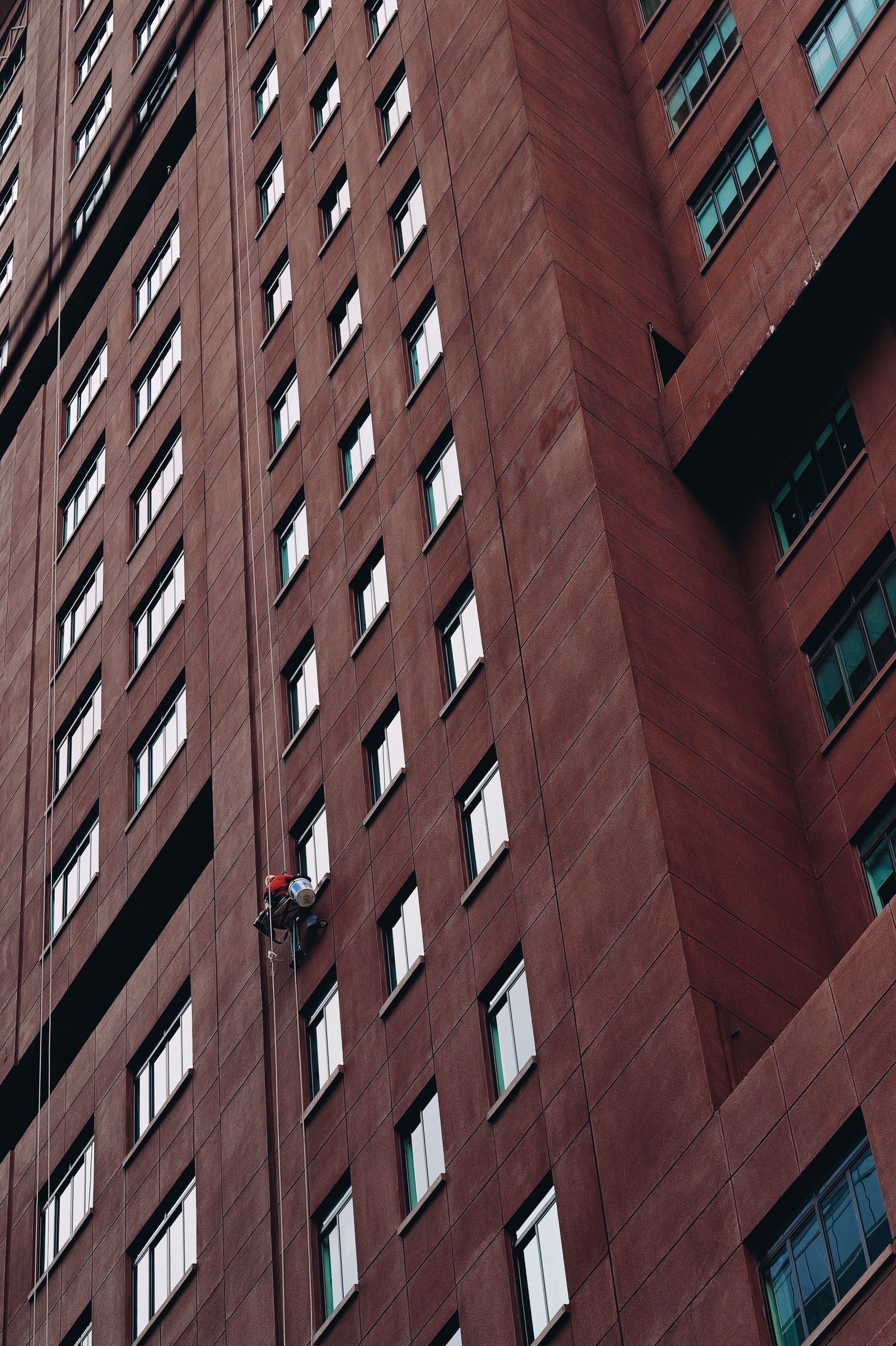
A downtown hotel or restaurant may need a phased plan around guest arrival, sidewalk access, storefront glass, masonry, and event schedules. A property near the University of Oregon may need work outside class changes and around bike movement. A healthcare building on Hilyard Street or River Road needs accessible routes, patient privacy, emergency access, and protected air intakes. An office in downtown, South Eugene, or Gateway may prioritize a consistent public entry. A warehouse or industrial property near the airport, Highway 99, or the Beltline may prioritize broad metal and concrete elevations while coordinating trucks, loading, security, and production.
The same address may need multiple methods. Soft washing can address suitable organic staining on an upper wall, a water-fed pole may fit selected glazing, controlled pressure may suit a durable loading apron, and hand work may be required around signage, doors, canopies, gutters, or architectural details. Drone assistance can be considered for appropriate upper zones after airspace and site review, but it does not replace close assessment or detail work. A method map is more useful than assigning one process to the whole property.
The desired business outcome should guide the sequence. A hotel may prioritize a guest-facing entry before a busy weekend. A school or university may want predictable phasing. A medical facility may value unobstructed routes more than a one-day completion. An industrial owner may focus on safe dock access and selected film removal. A good quote explains the tradeoffs in terms the property team can act on.
Let rain, moss, and drainage influence the choice
Pacific rain and shade can leave Eugene walls damp, especially near trees, covered entries, north-facing elevations, roof edges, and lower masonry. Moss-like growth, leaf residue, pollen, and organic film may recur where water or shade remains. A warm dry-season day can improve scheduling, but direct sun changes dwell time and plant protection. The method should be chosen alongside the weather window, not before it. Rain can dilute chemistry, move soil, make walking surfaces slippery, and change the route toward a catch basin or swale.
Stormwater planning is part of responsible method selection. A drain near a facade does not automatically authorize a discharge. Product, soil, rinse volume, slope, drain type, and local requirements determine what controls may be appropriate. Diversion, recovery, reduced water use, filtration, plant protection, disposal, and a pause plan may all be relevant. The property contact should identify catch basins, curb inlets, landscaped swales, detention features, garage entries, and any sensitive neighboring surface before work begins.
A recurring streak is a diagnostic clue. Overflowing gutters, blocked downspouts, failed flashing, parapet joints, irrigation spray, condensation, and roof-edge defects can keep a zone wet regardless of the selected cleaning method. Cleaning may improve the appearance while the owner arranges another inspection. A proposal should identify visible limitations rather than implying that washing repairs the building envelope.
Account for access, airspace, and occupied routes
Eugene commercial sites may have narrow downtown staging, mature trees, overhead utilities, covered walks, balconies, rooftop equipment, signs, active bike lanes, construction, and delivery traffic. Before choosing a method, identify water access, lift or pole positions, hose routes, barriers, spotters, accessible paths, doors, air intakes, vehicles, and emergency routes. The responsible person should know how work will pause when a student group, patient, guest, truck, cyclist, gust, or unexpected runoff enters the controlled area.
Drone assistance can support suitable broad upper elevations when stand-off distance, wind, visual control, launch and recovery space, public separation, facade compatibility, and water management are all acceptable. Commercial operations remain subject to applicable FAA rules, and airport proximity or changing site conditions may affect feasibility. A drone does not clean contact glass, inspect concealed damage, brush intricate details, or replace a ground safety plan. If controls are not adequate, a lift, water-fed pole, ground, or hybrid method may be the better decision.
Do not confuse fewer equipment relocations with fewer site obligations. Hoses, barriers, spotters, drainage controls, and public separation still need planning. The right method is the one that produces a defensible result while fitting the building's material, people, weather, and access constraints.
Questions to ask before requesting a quote
Ask which elevations are included, how each material will be treated, whether a test area is planned, what access equipment is expected, how plants and glazing will be protected, and how runoff will be managed. Ask how the schedule will avoid class changes, patient movement, guest arrivals, tenant activity, deliveries, or production. The proposal should state assumptions about water access, staging, barriers, security, weather, and exclusions.
Share photographs of the principal entrance, shaded wall, upper elevation, roof edge, loading area, windows, parking-side drainage, and any recurring wet mark. Mention moss-like growth, pollen, bird residue, mineral deposits, oxidation, loose materials, coating failures, previous cleaning damage, or suspected leaks. These details help distinguish a cleaning opportunity from a repair or restoration condition.
To discuss a Eugene property, call +1 239-351-2897 or email contact@dronebuildingcleaners.com. Drone Building Cleaners can help you get in touch, compare a soft-wash, controlled-pressure, aerial, or hybrid approach, and prepare a quote around the outcome and operating constraints of the building.